
 Back
Back

Book a Consultation

February 27, 2026
The adrenal glands are two small, hormone-making organs that sit on top of your kidneys and help regulate many body functions.
Tumors (growths) can form in these glands; most are noncancerous (benign), but rare forms can be cancerous (malignant), such as adrenocortical carcinoma (ACC). ACC is a rare cancer of the adrenal cortex, the outer layer of the adrenal gland.
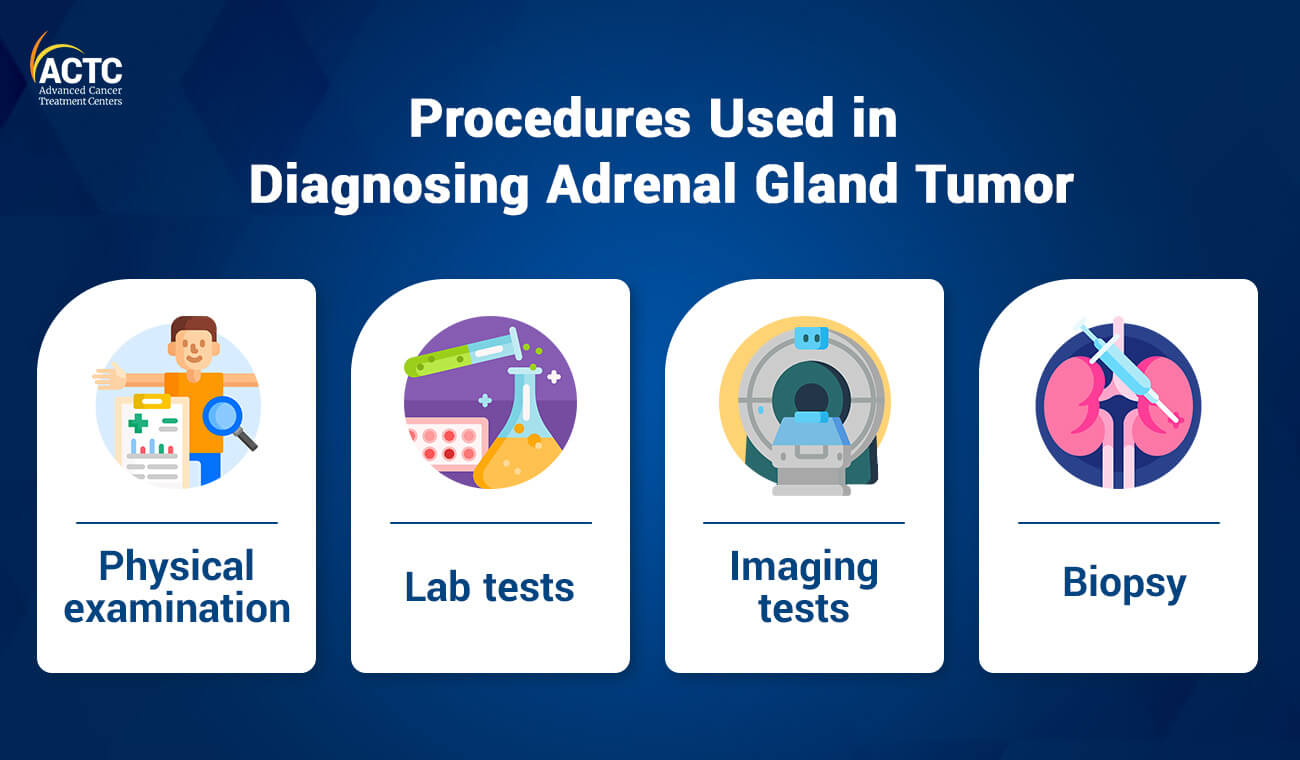
Doctors usually start with your symptoms and medical history, then use tests that help them visualize the gland and measure the hormones your body makes.
• History and physical exam: Your care team asks about symptoms and family history and looks for physical signs.
• Imaging Tests: These tests help detect a mass and determine whether it is cancerous and has spread.
• CT scans use X-rays to create detailed cross-sectional pictures of the adrenal area.
• MRI scans use magnetic fields and radio waves to visualize soft tissues.
• PET scans use small radioactive tracers to highlight areas of high activity.
• Blood and urine tests: Labs may assess hormone levels to determine whether a tumor is producing excess hormones.
• Biopsy (selective use): In a few situations, a small tissue sample is obtained under imaging guidance to examine cells under a microscope; however, this is rarely necessary for adrenal tumors.
Doctors build a comprehensive picture, combining symptoms, imaging, and laboratory tests before deciding whether a growth is likely benign or malignant and what to do next.
When a tumor is confirmed to be cancer, doctors use a system called TNM to describe how far it has spread and identify its stage. TNM stands for:
• T (Tumor): Size and whether it has invaded nearby tissues.
• N (Node): Whether the cancer has reached nearby lymph nodes.
• M (Metastasis): Whether the cancer has spread to distant parts of the body.
Here’s what each cancer stage means:
• Stage I: Tumor is limited to the adrenal gland.
• Stage II–III: Tumor is larger or involves nearby structures/lymph nodes.
• Stage IV: Cancer has spread (metastasized) to distant organs or tissues.
Staging helps your care team plan treatment and understand prognosis, but the exact criteria are determined from imaging and tests.
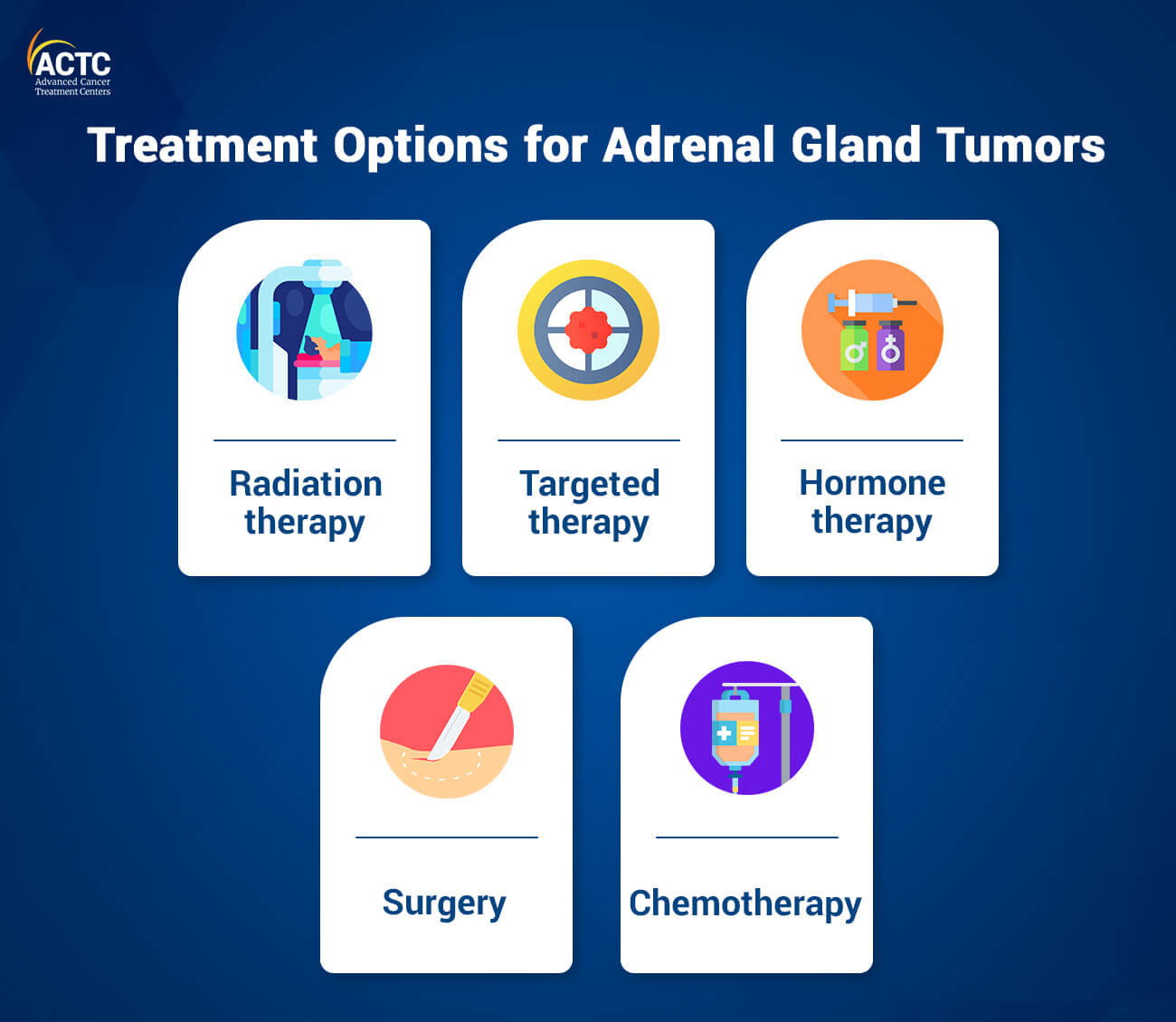
Your treatment plan depends on whether the tumor is benign or malignant, the extent of its spread, and your overall health.
• Surgery: The main treatment for tumors confined to the adrenal gland that need to be removed is surgical removal of the gland (adrenalectomy). For cancer, surgeons may also remove nearby tissues or lymph nodes if needed.
• Radiation therapy: Uses high-energy rays to kill or control cancer cells. It may be used in selected cases after surgery or when tumors can’t be entirely removed.
• Chemotherapy: Drugs that travel through the bloodstream to target cancer cells can be used when the cancer has spread or can’t be completely removed by surgery.
• Targeted or hormone-directed treatments: Some therapies target specific cell pathways or modulate hormone production when a tumor overproduces hormones. These may be part of clinical trials or tailored care plans.
Treatments can cause side effects, such as fatigue, nausea, or changes to the skin, which vary by therapy type and individual. At ACTC, your care team can assist in managing these.
Following treatment, ongoing follow-up visits are key to monitoring recovery, detecting any recurrence early, and managing long-term effects. Your team will recommend a schedule for visits, labs, and imaging tailored to your situation.
For any queries or concerns about adrenal gland tumors, please call 352-345-4565 or book an appointment at ACTC. We provide comprehensive, personalized treatment plans and state-of-the-art facilities to ensure high-quality care.


July 17, 2026
Sadness during cancer is human. Depression is a treatable medical cond...
KNOW MORE

July 17, 2026
A clear, week-by-week guide to post-chemo recovery at home. What to ex...
KNOW MORE

July 17, 2026
Radiation can change how your mouth feels and food tastes. Here is wha...
KNOW MORE
January 07, 2026
A chemo port is a small device placed under your skin that makes recei...
KNOW MORE
December 24, 2025
It's natural to wonder if testosterone replacement therapy (TRT) is sa...
KNOW MORE

December 24, 2025
A rash that will not calm down is scary, especially when it changes or...
KNOW MORE
Subscribe to our newsletter
Social Links


 15211 Cortez Boulevard, Brooksville, Florida 34613