
 Back
Back

Book a Consultation

December 16, 2025
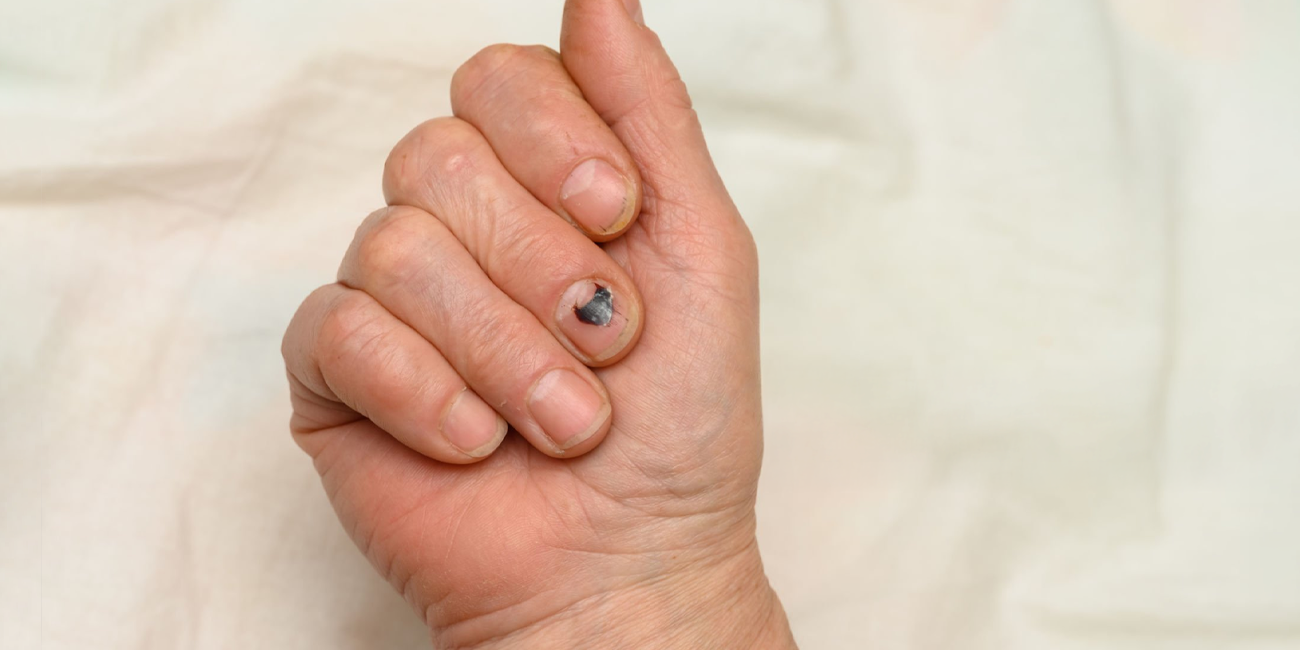
Seeing a dark streak under your nail that doesn't fade or grow out can be worrying. Subungual melanoma—melanoma that develops under the nail—is uncommon but serious, and it deserves immediate attention.
The condition isn’t linked to sun exposure, and even though injury isn’t proven to cause it, nail changes after trauma still need medical attention.
Subungual melanoma is a type of skin cancer that starts in the nail matrix, the growth area beneath the cuticle. It usually appears on just one nail, often affecting the thumb or the big toe.
Unlike common skin melanomas, subungual melanoma doesn't arise from UV sun damage and can easily be mistaken for fungal infections or bruising, leading to delays in treatment.
Recognizing and addressing it early improves your options for care and your long-term recovery outlook.
Certain nail changes are important warning signs:
If you notice any of these symptoms, particularly if only one nail is involved, it’s essential to get it checked by a specialist promptly.
While most nail bands are harmless, a timely check ensures peace of mind and proper care if needed.
A diagnosis begins with a detailed examination of your nail with dermoscopy, a painless process using a specialized magnifying device to identify suspicious patterns.
If concerns remain after the initial exam, the next step is a nail-unit biopsy. Your doctor numbs the affected finger or toe, removes the nail plate, and takes a small but deep tissue sample from the nail matrix.
This thorough approach allows a pathologist to examine cells closely, confirming whether it's melanoma and measuring its depth (Breslow thickness)—an important detail for planning treatment.
Occasionally, imaging studies like MRI or ultrasound may be performed to answer specific questions or help with staging, but imaging alone can’t replace the need for a biopsy.
Subungual melanoma follows the standard staging guidelines used for all melanomas. This system evaluates:
Tumor depth (known as Breslow thickness)
The presence or absence of surface ulceration
Whether the cancer has spread
If your melanoma measures 0.8 mm or more in thickness, or if it shows ulceration, we may recommend a sentinel lymph node biopsy. This procedure identifies whether microscopic cancer cells have spread to nearby lymph nodes, refining your cancer stage and guiding your care.
Stage-specific treatments and follow-up schedules align with national melanoma guidelines. Your oncologist will clearly explain what your individual stage means and what the next steps may look like for you. Discuss your personal outlook with your doctor.
Surgery is the main treatment option, intended to fully remove the melanoma along with a small rim (margin) of normal tissue to ensure complete removal.
For smaller or early-stage melanomas, surgeons may be able to remove the cancer while preserving as much of your finger or toe as possible. In some cases, a partial amputation might be necessary to clear thicker or larger tumors safely.
Depending on the stage and characteristics of the melanoma, your treatment might also include systemic therapies—medications that travel throughout the body—including immunotherapy or targeted therapy if a specific genetic mutation is identified.
At ACTC, your care is led by top-center-trained oncologists who customize your treatment to align closely with your personal health goals and lifestyle needs.
Cancer care extends beyond procedures—ongoing support matters greatly. Our dedicated nurse navigators help organize your medical records, coordinate appointments, and arrange specialist consultations, allowing you to focus on your recovery.
After your treatment, we'll provide guidance on proper wound care and nail regrowth timelines, as well as recommended follow-up visits.
When appropriate, we also offer tele-oncology follow-ups to simplify your ongoing care, reducing travel needs.
Regular follow-up care is essential after subungual melanoma treatment. The frequency of these visits will depend on your stage: lower-risk patients typically need fewer visits, while higher-risk cases require closer monitoring, especially during the first two to three years.
Routine scans or imaging studies might be recommended for patients with higher-risk melanoma, whereas lower-risk patients usually receive imaging only if symptoms arise.
Between appointments, you can perform simple monthly self-checks at home:
Inspect your remaining nails for any new streaks or abnormalities.
Examine your surgical scar closely for any changes.
Feel around nearby lymph nodes for unusual lumps or swelling.
If you notice any new symptoms, such as persistent coughing, unusual headaches, new lumps, or concerning changes, please contact our team immediately, without waiting for your next scheduled appointment.
Call 352-345-4565 or book an appointment.


July 17, 2026
Sadness during cancer is human. Depression is a treatable medical cond...
KNOW MORE

July 17, 2026
A clear, week-by-week guide to post-chemo recovery at home. What to ex...
KNOW MORE

July 17, 2026
Radiation can change how your mouth feels and food tastes. Here is wha...
KNOW MORE

January 07, 2026
A chemo port is a small device placed under your skin that makes recei...
KNOW MORE

December 24, 2025
It's natural to wonder if testosterone replacement therapy (TRT) is sa...
KNOW MORE

December 24, 2025
A rash that will not calm down is scary, especially when it changes or...
KNOW MORE
Subscribe to our newsletter
Social Links


 15211 Cortez Boulevard, Brooksville, Florida 34613