
 Back
Back

Book a Consultation

May 08, 2026
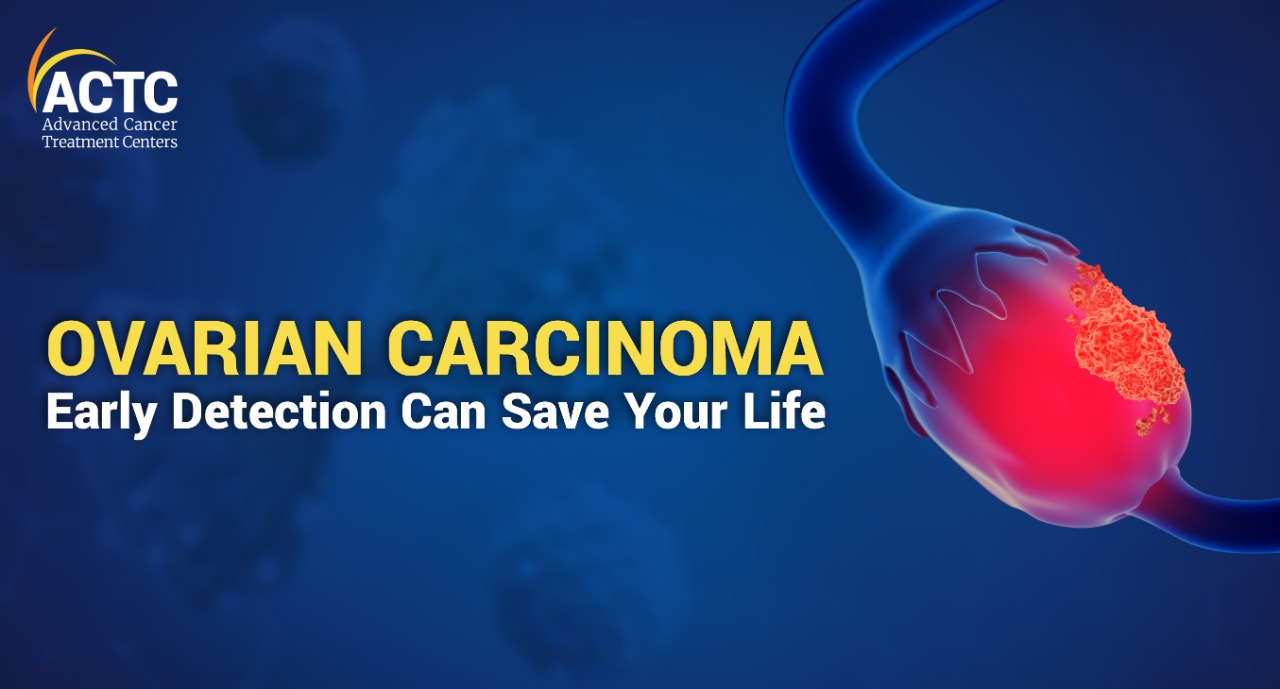
You have noticed bloating or pelvic pressure that keeps coming back, and you want a simple test with a clear answer. For most women, ovarian cancer does not work that way.
For people at average risk with no symptoms, no routine screening test has been shown to reliably lower deaths from ovarian cancer. That does not mean you are without options.
Early detection here comes down to three things. Notice symptom changes that stick around, pay attention to family history, and get checked when something feels off.
Some cancers have routine screening tests used on a set schedule before symptoms appear. Mammograms and Pap tests are familiar examples. Ovarian cancer is different.
For average-risk women without symptoms, blood work and ultrasound have not been shown to lower deaths from ovarian cancer when used as routine screening. They can also lead to false alarms and procedures that turn out not to be needed.
Ovarian cancer is often discussed alongside fallopian tube and primary peritoneal cancer because they can behave similarly. Our understanding ovarian cancer overview is a helpful next read.
Many ovarian cancer symptoms overlap with common digestive, urinary, or gynecologic issues. The pattern matters more than any single symptom.
Symptoms that are new, persistent, or unusual for you deserve a medical conversation. A practical threshold is symptoms that last about two weeks or longer.
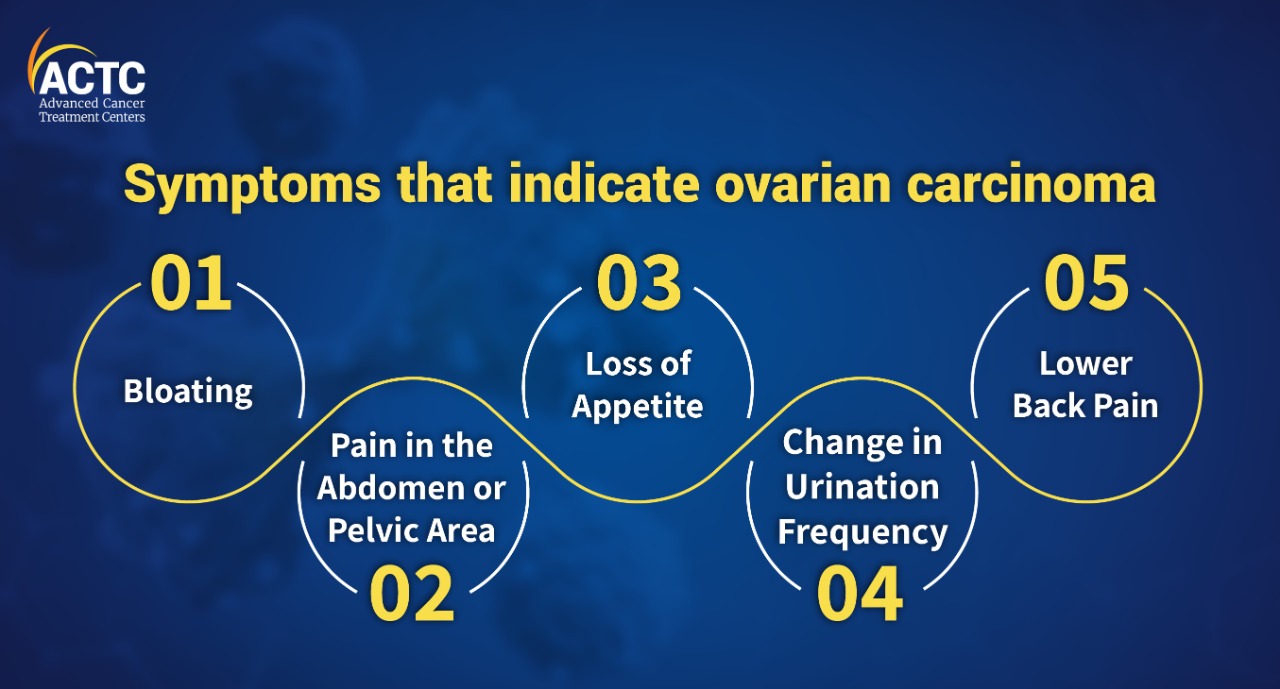
Common symptoms patients bring up include:
•Bloating: A swollen, full, or tight feeling that does not match your usual pattern.
•Pelvic or abdominal pain: Pressure, aching, or pain in the lower belly or pelvis.
•Trouble eating or feeling full quickly: A change in appetite that feels different from normal.
•Urinary changes: Needing to urinate more often or more urgently than usual.
•Bowel changes: New constipation, diarrhea, or other shifts in bathroom habits.
•Lower back pain: Ongoing back pain without a clear cause.
•Unusual vaginal bleeding or discharge: Bleeding after menopause, or bleeding that is not normal for you, should be checked right away.
These symptoms do not mean you have cancer. Most of the time, there is another explanation. If your body keeps sending the same signal for two weeks or more, it is worth a clinician visit.
If symptoms come on suddenly and are severe, such as heavy bleeding or fainting, call 911 or go to the emergency room.
A normal Pap test does not rule out ovarian cancer. Pap tests and human papillomavirus, or HPV, tests screen for cervical cancer. A person can be up to date on cervical screening and still need evaluation for ovarian-type symptoms.
Here is a simple way to think about it:
•Pap tests and HPV tests: Pap tests check for cervical cell changes. HPV tests look for high-risk HPV in cervical cells.
•Mammograms: Check for breast cancer changes.
•Ovarian cancer screening: Ovarian cancer does not have an equivalent routine screening test for average-risk women.
Broad lists of important cancer screenings for women deserve a careful read. Our cervical cancer all you need to know article covers Pap and human papillomavirus testing in more detail.
When symptoms persist, evaluation usually starts with a conversation, a physical exam, and questions about your personal and family history. These tools are part of an evaluation, not a routine screening plan.
Steps your clinician may discuss include:
•Pelvic exam: Can check for tenderness or masses, although small or early tumors may be hard to feel.
•Pelvic imaging: A transvaginal ultrasound can look at the ovaries and nearby pelvic structures.
•Blood work: A blood test such as CA-125 may sometimes be considered. Results can be elevated in some ovarian cancers and also in non-cancer conditions, so it is one piece of a fuller picture.
•Additional imaging: Computed tomography, or CT, scans may be used if findings are unclear.
•Specialist referral: Your clinician may refer you to a gynecologic oncologist, who specializes in cancers of the female reproductive system.
A single test rarely tells the whole story. Symptoms, exam, imaging, lab work, and history all help shape what happens next.
If a finding is uncertain, ask your clinician what it may mean, what follow-up is recommended, and whether a specialist referral makes sense.
If ovarian, breast, fallopian tube, or peritoneal cancer runs in your family, your next step may look different. This matters even more when cancer showed up at younger ages or across several relatives.
You do not need every medical detail before bringing this up. Bring what you know.
Family-history clues worth mentioning include:
•A close relative with ovarian, fallopian tube, or peritoneal cancer.
•Breast cancer at a young age in a close relative.
•Multiple related cancers on one side of the family.
•A known BRCA1 or BRCA2 inherited variant in the family.
A clinician can decide whether genetic counseling could be helpful for you. Genetic counseling is a conversation with a specialist who reviews family history and explains whether further testing might give useful information.
Our importance of regular breast tumor screenings article touches on related family-history questions.
If ovarian cancer is suspected or diagnosed, treatment planning is individualized. National guidance generally recommends that initial surgical evaluation be handled by a gynecologic oncologist. Surgery is performed outside ACTC at a center with that expertise.
Other parts of treatment can often be coordinated closer to home:
•Chemotherapy: Medications that target cancer cells, often given through an infusion.
•Targeted therapy: Medications that act on specific features of certain ovarian cancers, when testing supports their use.
•Genetic and tumor testing: When recommended, results can inform treatment choices and family-risk discussions.
Radiation therapy and immunotherapy are not typically main treatments for ovarian cancer and are considered only in specific situations.
If you have new or persistent symptoms, your first stop is usually your gynecologist or primary care clinician. ACTC is not a routine ovarian cancer screening site.
We may become part of your team after a concerning workup, a diagnosis, or an oncology referral. Our role is to help you understand options close to home.
•Local oncology care: Our Brooksville facility offers medical oncology, hematology oncology, and radiation oncology when clinically appropriate.
•Imaging and lab support: We have an in-house lab, in-house CT, and mobile PET imaging to support oncology workups.
•Practical planning: We help review records, talk through options, and prepare for decisions.
•Financial counseling: Our team can walk through the financial side of cancer care.
If gynecologic oncology surgery is part of your plan, that step is handled at a center with that specialty. We can coordinate the rest of your care.
Yes, ovarian cancer can sometimes be found early, but it is harder than with cancers that have routine screening tests. Early disease may cause no symptoms or only vague ones. Paying attention to persistent symptoms and family history is the most reliable path.
It varies. Stage 1 ovarian cancer may not cause obvious symptoms, and when they occur, they often look like vague signals such as bloating, pelvic pain, urinary changes, or feeling full quickly. New symptoms lasting about two weeks or longer should be checked.
No single symptom diagnoses ovarian cancer. A pattern of persistent symptoms is more useful than any one sign. Bloating, pelvic pain, early fullness, urinary changes, and unusual bleeding deserve attention when they stick around.
No. Pap and human papillomavirus tests screen for cervical cancer, not ovarian cancer. A normal Pap result does not address ovarian cancer risk.
If persistent symptoms have you worried, start with your gynecologist or primary care clinician. They can begin the evaluation and order the right initial tests.
If you already have a diagnosis or an oncology referral, our team can help you understand the next step. We will review what is known and help build a plan close to home.
To talk with our team, call 352-345-4565 or request an appointment online.


July 17, 2026
Sadness during cancer is human. Depression is a treatable medical cond...
KNOW MORE

July 17, 2026
A clear, week-by-week guide to post-chemo recovery at home. What to ex...
KNOW MORE

July 17, 2026
Radiation can change how your mouth feels and food tastes. Here is wha...
KNOW MORE

January 07, 2026
A chemo port is a small device placed under your skin that makes recei...
KNOW MORE

December 24, 2025
It's natural to wonder if testosterone replacement therapy (TRT) is sa...
KNOW MORE

December 24, 2025
A rash that will not calm down is scary, especially when it changes or...
KNOW MORE
Subscribe to our newsletter
Social Links


 15211 Cortez Boulevard, Brooksville, Florida 34613